
About
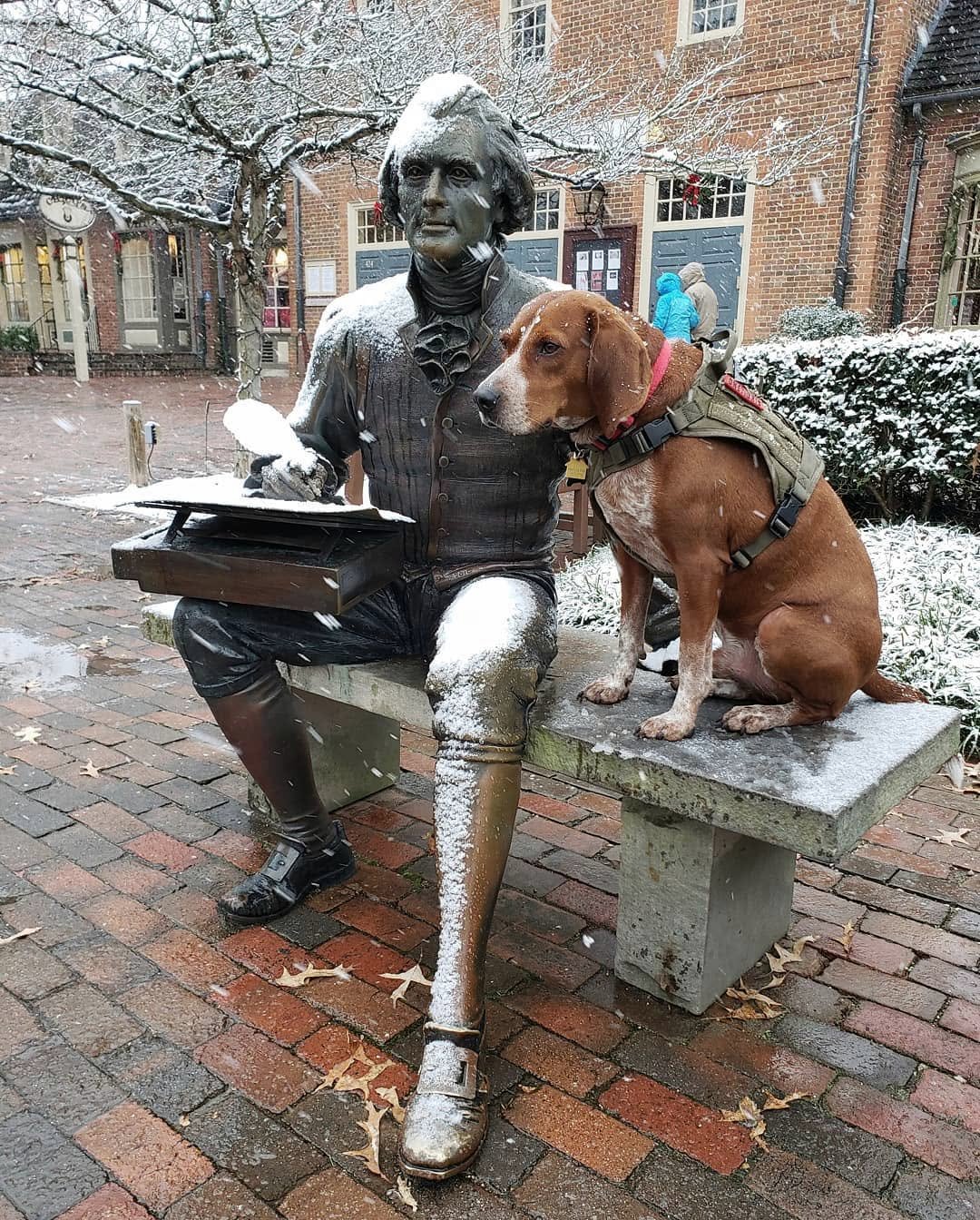
Tommy N. Turner is an independent researcher and writer based in Williamsburg and Christiansburg, Virginia. His work examines how institutions govern power under conditions of asymmetric information, compressed timelines, and misaligned incentives.
The recurring question across three decades of financial-services and technology work was how institutions actually behave under pressure. Power becomes harder to see as it becomes easier to exercise. Technology changes judgment, not just productivity. Structural drift shapes outcomes more reliably than stated intent. That perspective now shapes the research and writing.
Four research threads
AI adoption in higher education. How American universities have structured their response to generative AI since 2022. The working paper Governance Without Readiness inventories institutional policies, committee architectures, faculty development programs, and student-facing guidance at 53 universities, with deep case studies of William & Mary, Virginia Tech, the University of Virginia, Marymount, and Lehigh. A second round of case studies now underway extends the analysis across the South and Northeast, including a historically Black university. A companion project classifies institutional governance posture along a three-tier taxonomy (robust, moderate, thin) and documents the gap between AI policy development and the pace of workforce AI adoption. The central argument: universities have built elaborate governance scaffolding while deferring the harder questions about curriculum, assessment, and graduate readiness.
Data center fiscal and environmental policy. A multi-state research program covering Virginia, Georgia, and Tennessee under a shared analytical framework — fiscal incentives, grid impact, water use, and community consent. The Virginia work spans county and corridor case studies (Orange, Prince William, Henrico, Hanover, Chesterfield, Louisa, Goochland, Mecklenburg, Botetourt, Culpeper, and the Fredericksburg corridor) alongside a statewide synthesis. Parallel reports extend the analysis to Georgia localities and to Tennessee's emerging data center corridor. All of it draws exclusively on public sources: local budget documents, public utility commission filings, state legislative fiscal notes, and corporate SEC disclosures. Since July 2026, Turner has served on the advisory board of Data Centers and the Southern Energy Buildout: Implications for Electricity Costs, Energy Transition, and Energy Justice, a three-year Sloan Foundation-funded study at Emory University.
Small-city fiscal distress. Fiscal Crossroads, published in June 2026, is an independent options analysis of the City of Radford, Virginia, built from city budgets, audited financial reports, council minutes, Auditor of Public Accounts correspondence, and contemporaneous reporting. The report keeps description and inference distinct throughout and treats every figure as reproducible from the appendices.
Institutional risk and organizational silence. A parallel thread on why institutional life trains senior professionals to suppress evaluative alarm, and on the specific pathways by which AI-mediated workflows attenuate the visibility of problems before they become crises. The question running through both is how organizations lose the ability to see themselves clearly.
Democratic governance and the limits of state power. Essays that read constitutional history against contemporary policy. Recent pieces have examined state sponsorship of religion through Madison's 1785 Memorial and Remonstrance, federal pressure on press freedom through Jefferson's arguments for an adversarial press, customs enforcement and the origins of the Fourth Amendment, automated license plate reader governance in the Historic Triangle, the War Powers Resolution and the Iran conflict, and the patterns of democratic erosion political scientists have documented across countries and eras.
Public writing
Bylined op-eds have appeared regularly in The Richmond Times-Dispatch, The Virginian-Pilot, Daily Press, The Roanoke Times, The Virginia Gazette, Cardinal News, and Virginia Mercury. Individual columns also cross-run through the Lee Enterprises footprint, with appearances at The Daily Progress in Charlottesville, The Free Lance-Star in Fredericksburg, and other Virginia properties confirmed by the executive editor of The Richmond Times-Dispatch. A May 2026 Roanoke Times analysis traced Radford's path to fiscal distress designation through nine years of public-record warning signs. Every factual claim is traceable to a primary document.
Background
Two decades in financial-institution work preceded the current research. Two years of corporate banking at Wachovia, then seventeen years running banking systems — primarily loan accounting, alongside asset/liability management and the associated consulting and implementation groups — through ownership transitions at Logica, Misys, and Zoot Enterprises. At Misys specifically, the role covered global product strategy, P&L, and delivery for banking software serving more than 300 financial institutions across North America, Europe, and Asia.
Turner has run Turner Advisory Group LLC, an independent strategic advisory practice, since 2011. He holds an MBA in Finance from Emory University's Goizueta Business School, a BBA in Accounting and Economics from the University of West Georgia (then West Georgia College), and a Higher Education Teaching Certificate from Harvard's Derek Bok Center for Teaching and Learning.
How to cite
Cite the Zenodo concept DOI. Concept DOIs always resolve to the latest version of a deposit, and they are what should appear in a citation. Version DOIs and this site's URL are not citation targets. ORCID 0009-0005-7422-9881 binds the Zenodo and SSRN identities.
Contact
Correspondence: tommy@gofast.pro
Research identifiers: ORCID 0009-0005-7422-9881 · Google Scholar profile